Budgeting
How to Divide Your Money: The 50/30/20 Rule
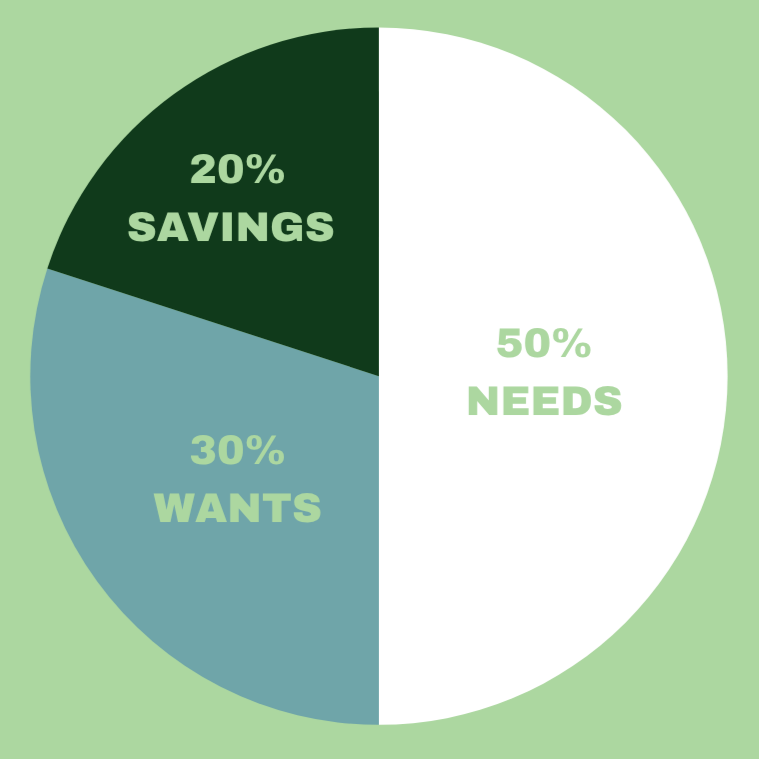
A simple way to organize your budget is by using the 50/30/20 rule, which divides your income into three categories: needs, wants, and savings or debt payments.
Needs (50% of your income)
Needs are essential expenses required for everyday living and financial stability.
Wants (30% of your income)
Wants are optional purchases that improve your quality of life but are not necessary.
Savings or Debt Payments (20% of your income)
This category includes financial priorities such as building your savings, building an emergency fund, contributing to retirement, or making extra payments toward debt.

How to Start Budgeting
1. Track your spending for one month
Review bank or credit card statements, or use a budgeting app, to record every purchase and identify spending patterns.
2. Create three spending categories
Separate expenses into needs, wants, and savings or debt payments.
3. Categorize each transaction
Label every purchase so you can clearly see how your money is being used.
4. Calculate your percentages
Determine how much of your income is currently going toward each category and compare it to the 50/30/20 guideline.
5. Set financial targets
If your wants category is higher than the recommended amount and you have a goal like building an emergency fund, try reducing spending in the wants category so you can move more money into the savings or debt payments category until you reach your goal.
6. Put systems in place
You can automate savings, reduce or cancel subscriptions, or set aside a specific amount of “fun money” for optional spending.
7. Review and adjust over time
As your life changes, your budget may need updates to reflect new expenses or priorities.
Common Spending Mistakes in Your 20s
Not having a budgeting system
Without a structured plan for managing money, it can be harder to stay aware of where your income is going.
Not having an emergency fund
Emergency funds are meant to cover unexpected expenses, such as job loss or medical costs. To build one, set a savings goal, contribute regularly from each paycheck, and increase contributions when possible.
Not saving for retirement
Saving early can help prepare for the future and support long-term financial stability.
Disclaimer: This information is provided as an educational resource. College Money Mind does not receive compensation for recommendations and encourages students to research options before making financial decisions.