taxes
Why Taxes and Accounting Matter
Many college students encounter taxes for the first time through part-time jobs, internships, or freelance work. Taxes and accounting affect the money you earn, the money you keep, and the financial decisions you make while in school and after graduation. Understanding basic tax concepts can help make forms, paychecks, and tax documents easier to understand.
With that said… let’s dive in!
income
What is Income? Income is the money, property, or services an individual or business receives in exchange for labor, services, the sale of goods, or through financial investments.
Earned income: money you receive from working (this includes salaries, wages, tips)
Unearned income: money you earn passively or without performing any labor (this includes dividends, investments, interest, content creation, brand partnerships)
W-2 vs 1099
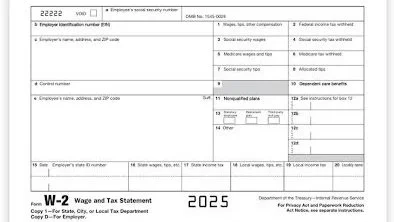
If you’re a W-2 employee (most students are if they’re working), you are earning a salary, your taxes will be withheld by your employer, you’ll
receive benefits, and have controlled work hours (typically 20 hrs for part-time, typically 40 for full-time).
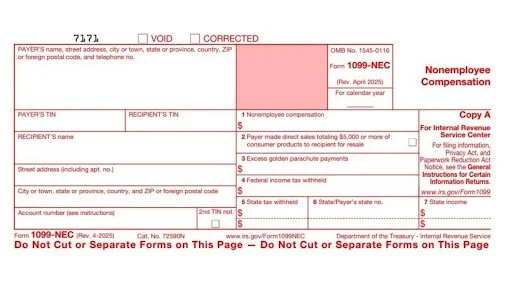
A 1099 is for an independent contractor (self-employed), you are responsible for setting your own hours, and you pay your own taxes (which includes self-employment tax). There are different types of 1099’s, but the most common for college students is form 1099-NEC (Nonemployee Compensation). It reports income earned as an independent contractor or freelancer.
Watch this video to learn more about the difference between a 1099 and a W-2: https://www.youtube.com/watch?v=ohrx-yHESF4
Here’s an easy way to put it: W-2s offerstability, 1099s provide flexibility
W-2 EXAMPLE
1099-NEC EXAMPLE
Gross vs Net Pay
When you earn income, you will see gross pay and net pay. What’s the difference?
Gross pay is everything you earned in a period of time (generally 2 weeks) from working, without anything being withheld
Net pay is what you get to keep (or take home) after taxes, retirement contributions, and FICA is taken out.
Why do taxes exist? They provide revenue for the government to fund social programs, public goods and services, government operations, and things that will benefit society as a whole! This can include things like education, roads, and healthcare.
How does the IRS work? The Internal Revenue Service is the government agency responsible for collecting taxes and enforcing tax laws. Here’s an article from Investopedia that explains what the IRS does and how it will affect you: https://www.investopedia.com/terms/i/irs.asp
Paychecks and Tax Withholding
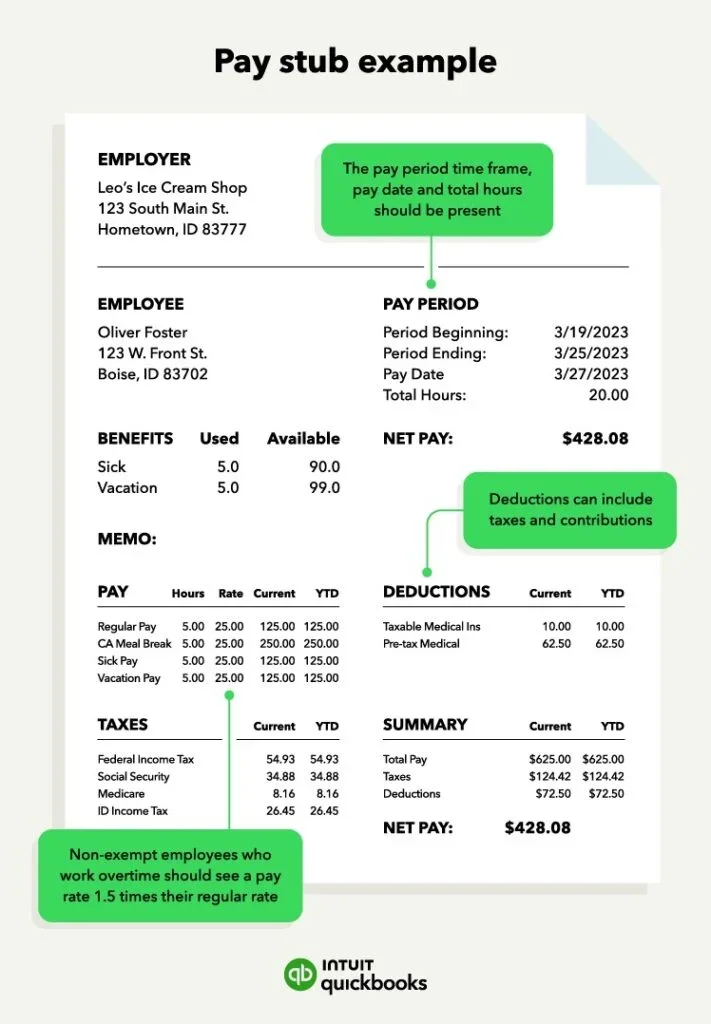
Reading a paystub: All paystubs will look slightly different, but the core sections are always similar.
This will include things such as employee & pay period information, earnings, taxes withheld, pre/post-tax deductions, and net pay.
Why this matters: Paystubs show exactly where your money goes and how much you actually earn after deductions. As a college student, this is one of the easiest ways for you to understand how income really works!
Components:
Employee & Pay Period Information: Shows your name, employer, and the dates you were paid for.
Earnings: Your gross pay (total before deductions), including hourly wages, salary, overtime, or bonuses.
Taxes Withheld: Federal, state, and sometimes local taxes taken out of your paycheck.
Pre-Tax Deductions: Things taken out before taxes such as retirement contributions or health insurance.
Post-Tax Deductions: Things taken out after taxes like wage garnishments or certain benefits.
Net Pay: The amount you actually take home after everything is deducted.
Federal vs state taxes: Federal and state taxes are paid separately to fund different government services. While both are mandatory, they are essential for funding public goods and services that improve the quality of life. They are also automatically withheld from paychecks in Arizona.
Federal covers: Social Security, Medicare, and national defense
State covers: Education, public safety & health, transportation (roads, bridges), local services (libraries, parks)
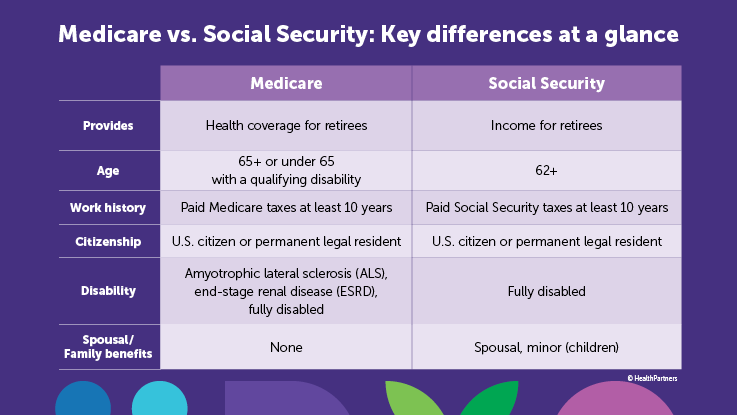
Federal Insurance Contributions Act (FICA): A tax that automatically comes out of your paycheck. It’s a U.S. law that requires employers and workers to contribute to two federal programs: Social Security and Medicare.
Social Security tax funds retirement benefits and survivor benefits for families of deceased workers, and disability benefits.
Medicare tax helps cover healthcare for seniors (age 65+) and certain individuals with disabilities. This is not to be confused with Medicaid, which is a joint federal-state program for people with low income. The easiest way to remember the difference? Medicare is based on age. Medicaid is based on income level and household size.
Here’s a chart that further explains the differences:
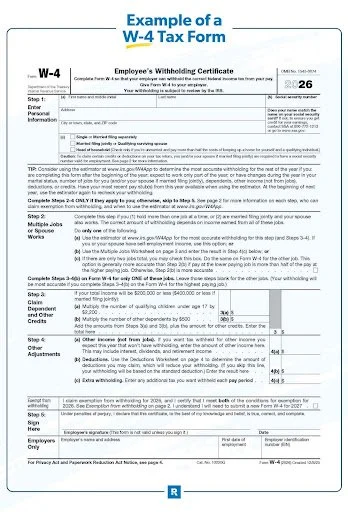
What a W-4 Does: A W-4 is the form that tells your employer how much federal tax to take out of your paycheck. It helps determine your take-home pay and whether you get a refund or owe taxes later. You can also update your W-4 anytime you want to adjust how much tax is taken from your paycheck.
Your answers on the form help estimate:
Your filing status (single, married, etc.)
If you have multiple jobs
Whether you have dependents
If you want extra taxes withheld
Why it matters:
They make sure you pay the correct amount of tax during the year
If too much tax is withheld, you may get a refund when you file
If too little tax is withheld, you may owe money when you file
When you should fill it out:
You start a new job
When you change jobs
Your financial situation changes
Why refunds happen: Refunds happen when too much tax was taken out of your paycheck during the year. The Internal Revenue Service (IRS) catches this and will send you a refund if you have one. Note: this is not free money. It’s a return of your own money that you overpaid.
Example: Your employer withheld $2,000 in federal taxes. Your actual tax bill is only $1,500. You get $500 back as a refund.
Pro-tip: You can adjust your W-4 so you don’t overpay (refund) or under pay (owe $)
That was a lot! Here’s a memory tip 💡
Federal = big government stuff
State = local stuff
FICA = future-you money
W-4 = paycheck traffic control
Refund = overpaid allowance returned
Budgeting and Cash Flow
Fixed vs variable expenses: Understanding expenses helps you control where your money goes.
Fixed expenses: These costs stay mostly the same each month. Because these costs are predictable, they’re easier to plan for in a budget.
Examples: rent/housing, loan payments, phone bill, subscriptions (Netflix, Spotify)
Variable expenses: These changes change depending on how much you spend.
Examples: groceries, gas, eating out, shopping, entertainment
Needs vs wants: A major part of budgeting is separating needs from wants. A good budgeting rule is cover needs first → save second → spend on wants last. There’s also the 50/30/20 rule. Check out the budgeting tab on our website for more details!
Needs: Things required for basic living and functioning.
Examples: housing, food, transportation, healthcare, utilities, basic clothing
Wants: Things that improve your lifestyle, but are not essential.
Examples: concert tickets, dining out, travel, streaming subscriptions
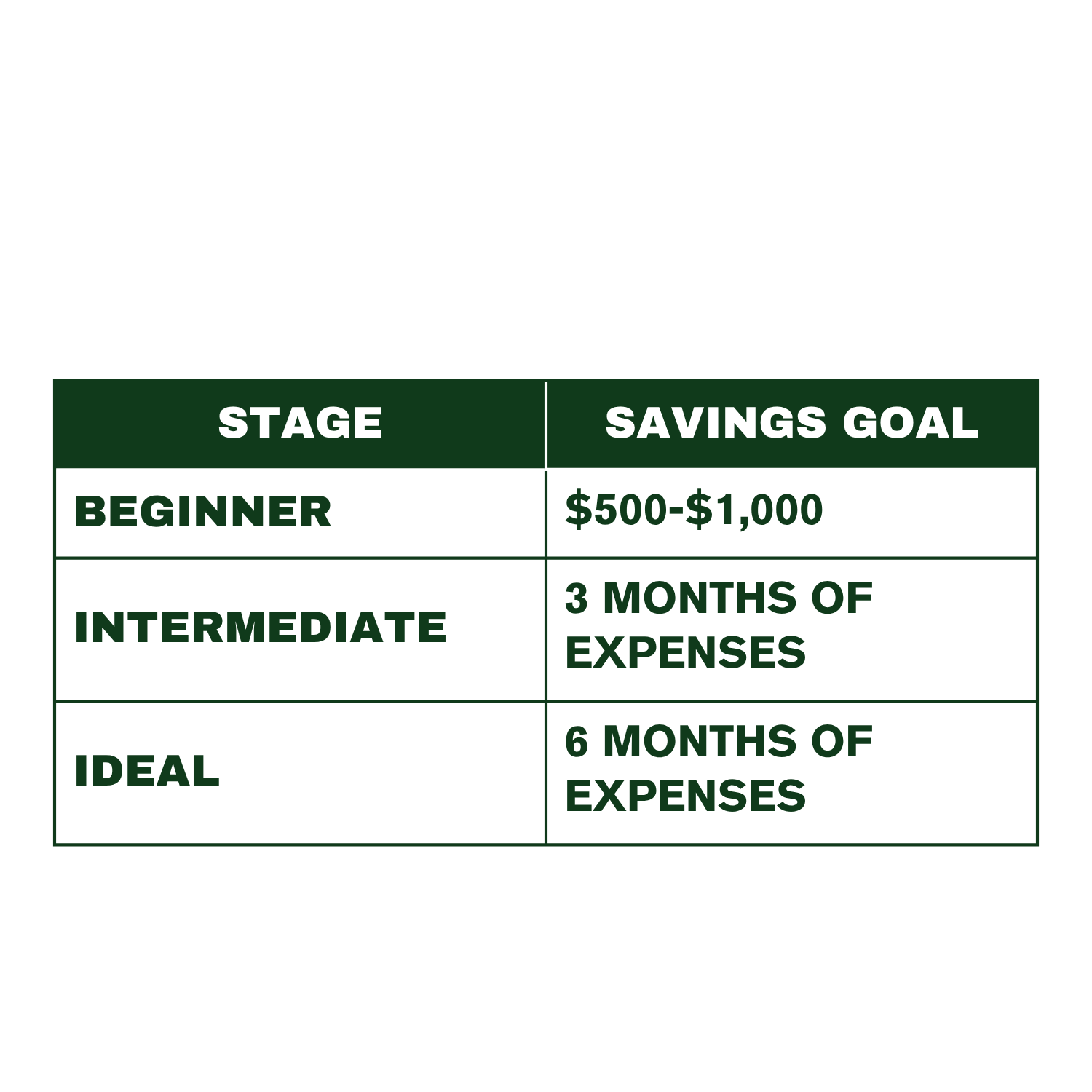
Emergency funds: An emergency fund is money set aside for unexpected expenses. Even as a college student, having an amount set aside and saved, such as $500, can make a huge difference. Without emergency savings, people often rely on credit cards or loans, which can lead to debt.
Typical emergency fund goals:
Taxes College Students Actually Face
Filing taxes basics: Filing taxes means reporting your income to the Internal Revenue Service (IRS) each year.
You report:
Income from jobs
Scholarships (sometimes)
Side hustles and freelance work
After reporting your income, the IRS determines
How much tax you owe
Whether you get a refund
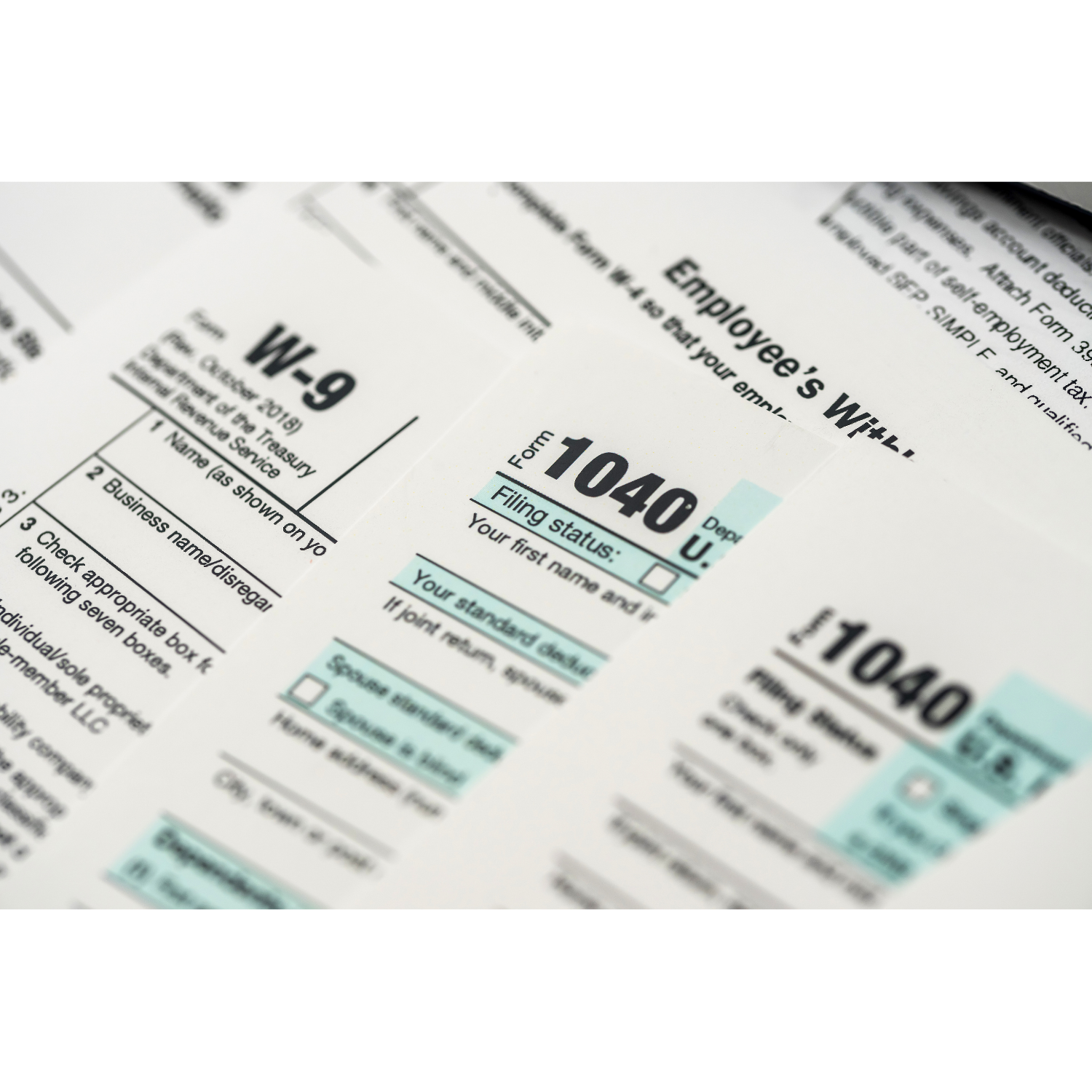
What is a 1040? The Form 1040 U.S. Individual Income Tax Return is the main tax form individuals use to file their federal taxes. Most tax software fills this out automatically after you enter your information.
It summarizes:
Your income
Deductions
Credits
Total taxes owed
Standard deduction: The standard deduction reduces the amount of income you are taxed on. For most students filing as single, this amount for 2025 was $15,750.
Filing status: Your filing status determines your tax rates and your standard deduction. Most students file as Single, unless married or supporting dependents. Common statuses include…
Single (for most college students)
Married filing jointly
Married filing separately
Head of household
Dependents: A dependent is someone who relies on another person for financial support. Many college students are still claimed as dependents by their parents. Even if your parents claim you, you may still need to file your own tax return if you earned income.
When you have to file: In general, students must file a federal tax return if:
Earned income is above the standard deduction
They had self-employment income over $400
Taxes were withheld and they want a refund
Even if you’re not required to file, it can be smart to file if taxes were withheld from your paycheck.
Education credits: Education credits help reduce the taxes you owe for qualified education expenses. You or your parents can take advantage of these. The two common ones are:
American Opportunity Tax Credit (AOTC)
Provides up to $2,500 per year for undergraduate education only
Eligible expenses include tuition and required course materials
This credit is partially refundable, meaning you could receive money back.
Lifetime Learning Credit
Provides up to $2,000 per tax return
It can be used for undergraduate courses, graduate school, and professional development classes
Unlike AOTC, this credit is not refundable

Self-Employment and Side Hustles
Many students earn money through…
Freelancing
Tutoring
Telling items online
Gig work (DoorDash, Uber, etc.)
Social media (TikTok, Instagram)
This is considered self-employment income.
Self-employed workers must pay self-employment tax, which covers both the employee and employer portion of Social Security and Medicare. Total self-employment tax for 2026 is 15.3%. Students must file taxes if self-employment income exceeds $400.
Additional resource: https://www.irs.gov/businesses/small-businesses-self-employed/self-employment-tax-social-security-and-medicare-taxes
CFP Tax Tables: https://www.cfp.net/-/media/files/cfp-board/cfp-certification/exam/exam-tax-table.pdf

final thoughts
The world of accounting is broad, and it’s impossible to cover every situation you may encounter. However, the information here is designed to give you a strong foundation in the basics and help you understand how accounting principles can support smarter financial decisions.
While some individuals choose to complete their own taxes using available resources, others prefer to work with a qualified accountant when things become more complex. Either way, there are options for guidance and support to help you stay confident and informed.
Disclaimer: This information is provided as an educational resource. College Money Mind does not receive compensation for recommendations and encourages students to research options before making financial decisions.